
Professional Mesh Integration Education
Learn the method. Understand the case. Know what to do when it changes.
Mesh Integration training for hairstylists who want more than a perfect-install demo. Learn how assessment, foundation, placement, tension, customization, maintenance, and real-world judgment work together when serving thinning-hair and hair-loss clients.

Beyond the Install
Technique matters. Judgment matters more.
A repeatable installation sequence is useful, but every thinning-hair client presents a different combination of density, growth pattern, scalp condition, support hair, head shape, tension tolerance, and maintenance needs. CM education is designed to help you understand what you are seeing before you decide how to proceed.
The goal is not to force every client into the same answer. It is to build the professional reasoning to assess the case, modify the plan when necessary, and recognize when another solution may be more appropriate.
The CM Approach
Observe first. Assess the case. Then choose the right next step.
Strong Mesh Integration work begins before the foundation is built. The training emphasizes the decision-making behind the service so the technique has a reason, not just a sequence.
Observe
Look closely at density, pattern, scalp condition, growth direction, available support hair, and the areas that need coverage.
Assess
Think through candidacy, foundation design, placement, tension, customization, and the client’s maintenance reality before beginning the service.
Proceed with intention
Build the plan around the case in front of you, adjust when conditions change, and know when a different path deserves consideration.
Is This for You?
Built for stylists who want to develop a specialty, not memorize a shortcut.
This training may be a fit if you…
- are already working behind the chair as a hairstylist or extension professional
- want to serve thinning-hair and hair-loss clients more intentionally
- have encountered cases traditional extension placement could not adequately address
- are willing to practice on a mannequin before progressing to real model work
- want to understand the reasoning behind the method, not only the steps
It may not be the right fit if you…
- expect instant proficiency after watching a few videos
- are unwilling to practice the technique repeatedly
- are looking for a quick-income shortcut rather than a professional specialty
- do not want to think through consultation, maintenance, and long-term client care
The Learning Pathway
Practice the foundation before you carry it into a real case.
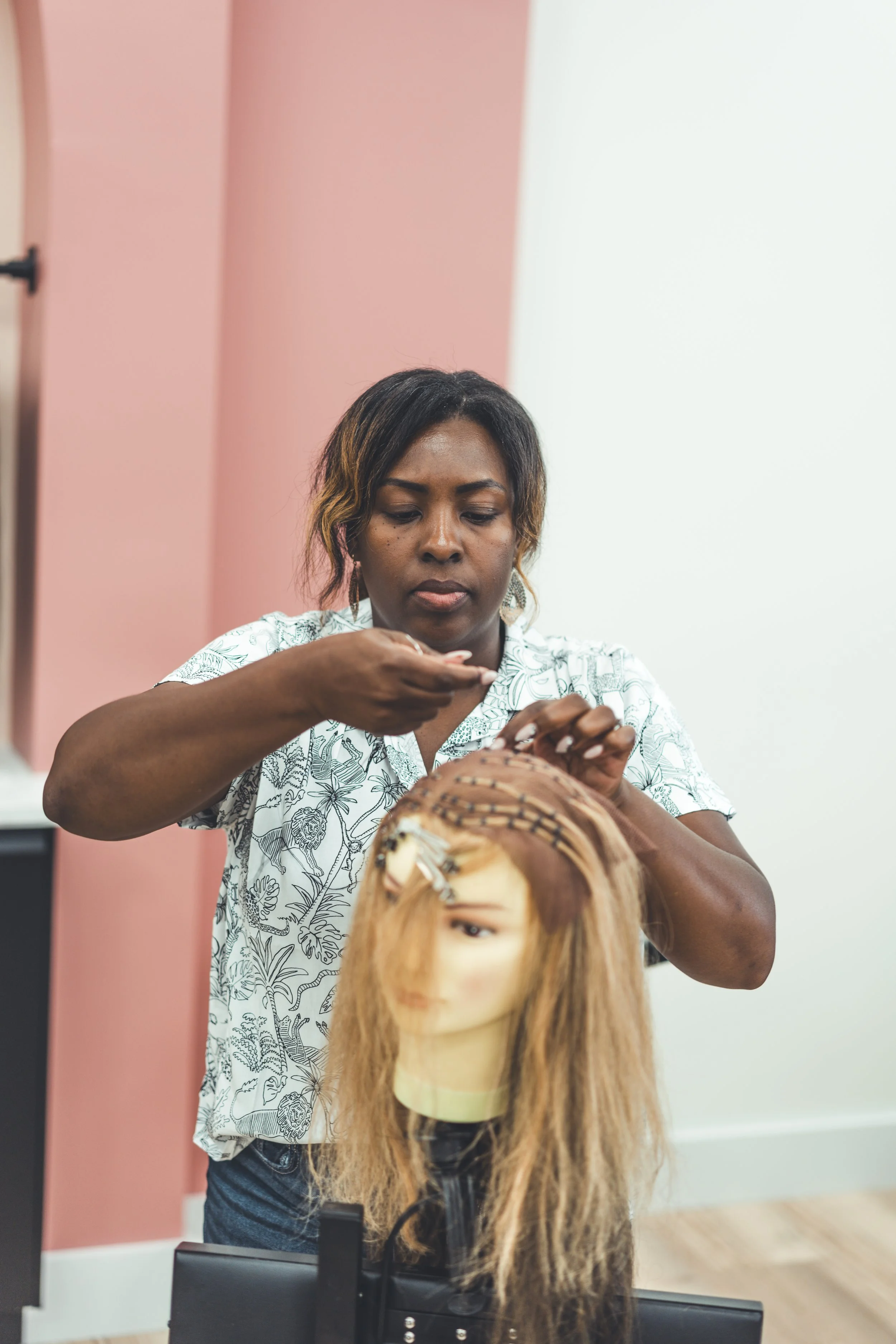
The current training uses a mannequin-to-model progression so the method can be practiced, repeated, and understood before it is applied in a real-world setting.
Learn the structure
Understand the purpose of the foundation, how placement and tension work together, and why the case should drive the design.
Practice on a mannequin
Build familiarity with the physical method before moving into the added variables of a live model or client.
Progress to real-world application
Carry the technical foundation into real model work where density, growth pattern, customization, and maintenance decisions become part of the process.
What You’ll Learn
The training is organized around three connected areas of judgment.
Rather than overwhelm you with a lesson count, the curriculum is best understood by what you are learning to evaluate, build, and manage.
Assessment & Candidacy
Learn to look at the client before you look at the method: density, hair-loss pattern, scalp condition, growth direction, available support hair, and the practical demands of the service.
Foundation, Placement & Tension
Build and customize the mesh foundation around the client’s existing hair and head shape while considering security, movement, comfort, density, placement, and tension.
Beyond Installation Day
Develop a working understanding of maintenance, refit, removal, scalp reassessment, at-home care, and the adjustments that become necessary as an installation grows out.
Technical Reasoning
The case should shape the technique — not the other way around.
Mesh Integration becomes more useful when you understand why you are making each decision. That means thinking through where the client has usable support, how the foundation should sit, where tension is introduced, how density is distributed, and what the service will require after installation.
The objective is professional judgment: being able to explain the plan to yourself before you execute it.
After the Install
A good service plan includes what happens next.
Mesh Integration does not end when the finished hair leaves the chair. The training addresses maintenance, refit, removal, at-home care, scalp reassessment, and the practical adjustments that matter as the client’s own hair continues to grow.
This is where the ability to reassess the case becomes just as important as knowing how to create the original foundation.
Behind-the-Chair Implementation
The service has to make sense beyond the technique.
CM education also introduces the practical side of offering a specialty service: consultation thinking, setting expectations, understanding the service structure, and approaching the client relationship with more intention.
Traditional extensions are often chosen as an enhancement and can be easier for a client to pause when priorities change. Integration services can serve a different kind of ongoing coverage need for guests experiencing thinning or hair loss. That makes consultation, maintenance, customization, and long-term client care especially important.
The current training is not positioned as a complete business system or income formula. The focus remains on developing a specialty that can be implemented thoughtfully inside a real salon practice.
From Education to Practice
Built from real hands-on education, not theory alone.
The work is tactile, visual, and case-specific. Practice matters because the confidence to make decisions behind the chair comes from understanding both the method and how it behaves in real use.


Your Educator
Taught by Carissa Maness
Carissa brings 14 years behind the chair and 9 years teaching other stylists to the way she approaches Mesh Integration education. Her teaching is grounded in practical client work: assessment, foundation, tension, maintenance, and the judgment required when a real case does not behave exactly like a demonstration.
Current Online Training
Learn online. Practice intentionally. Progress into real application.
The current Mesh Integration training is delivered online through Kajabi and is built around a mannequin-to-model progression. Enrollment options and current pricing are kept on the live Kajabi training page so you always see the current offer before purchasing.
Looking Ahead
In-person education may return to CM.
No in-person dates, locations, pricing, or enrollment are currently open. When a new hands-on format is confirmed, details will be published here.
Enrollment
Ready to explore the current Mesh Integration training?
Review the current enrollment options, payment choices, and course details directly on the live Kajabi training page.
Frequently Asked Questions
Before you enroll
Who is this training designed for?
Is the training online?
Will I practice before working on a model?
Does this course include Meshless Integration?
Does completing the course automatically issue a certification?
Where can I see the current price and payment options?
Take the Next Step
Build the judgment behind the method.
Explore the current training and decide whether Mesh Integration belongs in the specialty work you want to build behind the chair.