
For Licensed Hairstylists
Hair Replacement Training for Hairstylists
Traditional extension work solves one problem. Fine, thinning, and hair-loss clients need a different kind of assessment, planning, and skill set — hair replacement is a distinct professional specialty, and it can be learned. Carissa Maness teaches hairstylists how to build it, starting with Mesh Integration.
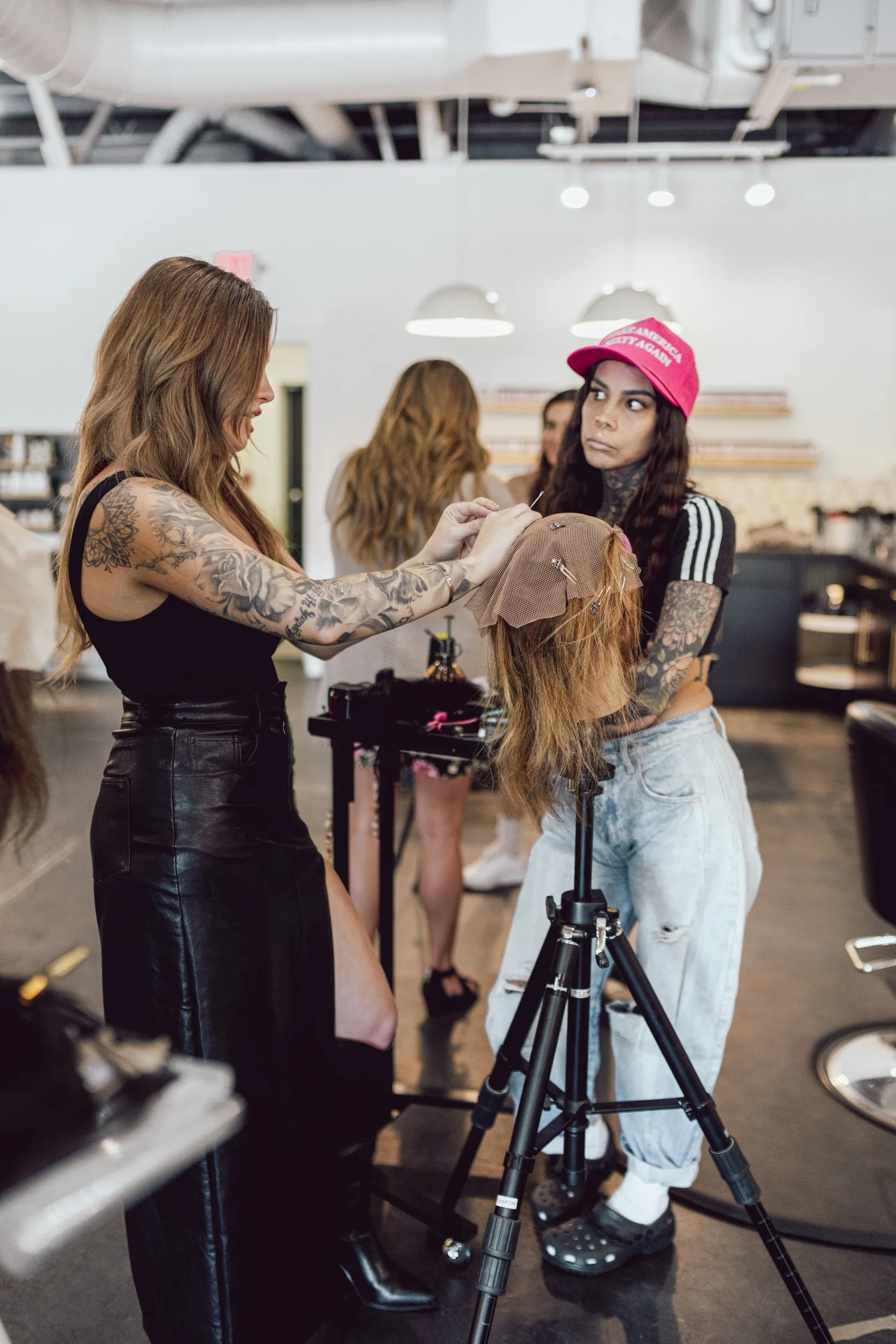
The Professional Gap
Extensions solve one problem. Thinning and hair-loss clients need another.
Most stylists are trained extensively in extension work — methods built around clients who have enough natural hair to add length or volume to. That training doesn't disappear when a client's situation is different. It just stops being enough.
A client with visible thinning, a receding pattern, or hair loss from a medical cause needs something a standard extension consultation isn't built to give: a different kind of assessment, a foundation that accounts for scalp and existing hair condition, and a plan that can be adjusted as the case changes over time. Many stylists sense the gap the moment a client like this sits in the chair — and either turn the client away, or try to make a technique built for a different problem work anyway.
Hair replacement is the specialty built for that gap. It isn't a harder version of extensions — it's a different discipline, with its own assessment framework, judgment calls, and skill set.
Beyond the Basics
What professional hair replacement education actually adds
It starts before any technique. Hair replacement education adds a structured framework for evaluating the client's existing hair, visible scalp considerations, service goals, and suitability for the work — and for recognizing when a client's needs fall outside a stylist's scope entirely.
From there, it adds the reasoning behind foundation, tension, and customization decisions, so a stylist isn't just following one map for every client — they're building an appropriate solution around the person in the chair. It adds a maintenance and re-assessment mindset, because fine and thinning-hair work changes as the client's density, lifestyle, and needs change. And it adds the client-communication skills to set honest expectations from the first consultation.
This page won't walk through the curriculum step by step — that's what the training itself is for. What matters here is the shape of what's missing without it: judgment, not just technique.
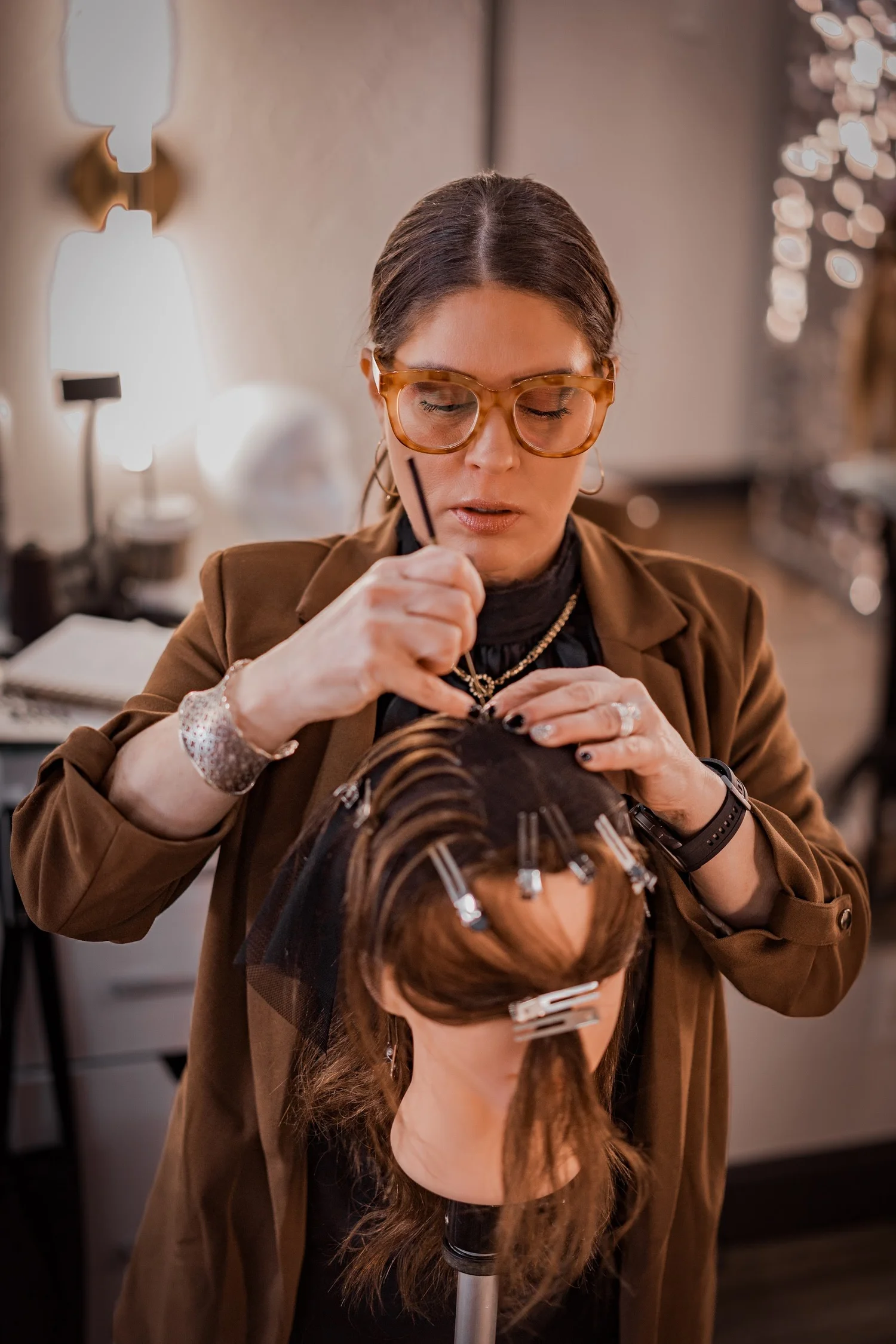
One Professional Pathway
Where Mesh Integration fits into hair replacement
Hair replacement is the broader category. Mesh Integration is one professional method within it — a mesh-based foundation and integration approach designed to address fine, thinning, and hair-loss clients whose needs go beyond what traditional extension methods can offer.
It isn't the only approach a stylist might learn, and it isn't right for every case — part of the education is learning how to recognize when it's the appropriate solution, when a different approach fits better, and when a client should be referred elsewhere. Carissa began working with Mesh Integration in 2021 and has continued refining her own professional approach to assessment, foundation, tension, application, and maintenance through ongoing client work.
Is This You?
Who this education is for
- Licensed hairstylists who already have a service base — extensions, color, or general styling — and want to add a professional specialty.
- Stylists who are increasingly asked by clients about thinning hair or hair loss and don't yet have a confident, structured answer.
- Stylists who've had to turn a client away, or stretch a technique built for a different problem, because nothing in their training quite fit.
- Anyone who wants a real assessment and decision-making framework — not a single script applied to every client.
The Core Framework
What stylists need to learn to work in hair replacement
Assessment
Evaluating a client's hair, scalp, and goals before recommending any solution.
Candidacy
Understanding who is — and isn't — a fit for a given approach, and when to refer.
Foundation
The principles behind building a secure, comfortable base for the client's specific case.
Tension
How tension and placement decisions affect comfort, longevity, and hair health.
Application
Applying technique with control and precision — not just following steps.
Maintenance
What ongoing care, adjustment, and re-assessment actually requires over time.
Case Judgment
Knowing when to proceed, when to modify the plan, and when to choose a different solution.
How This Differs
Hair replacement education vs. traditional extension education
Neither is a lesser skill — they're built for different clients and different problems.
Extension-Focused Education
- Typical Client
- Has sufficient natural hair; wants added length, volume, or fullness.
- Primary Goal
- Enhancement — adding to an already-healthy foundation.
- Assessment Focus
- Hair type, density, and desired length/style outcome.
- Maintenance Pattern
- Regular move-ups on a predictable cycle.
Hair Replacement Education
- Typical Client
- Experiencing visible thinning, hair loss, or coverage concerns.
- Primary Goal
- Coverage, confidence, and a solution suited to a changing foundation.
- Assessment Focus
- Existing hair, visible scalp considerations, service suitability, and realistic expectations.
- Maintenance Pattern
- Ongoing re-assessment as density and needs evolve over time.
Growing Your Career
Expanding your services with hair replacement
Adding hair replacement to your service menu isn't just a new technique — it's a new client population you may currently be turning away, and a specialty that positions you as the stylist people are referred to for cases other stylists don't take on.
This page won't promise specific income, booking, or pricing outcomes — those depend entirely on your market, your existing clientele, and how you choose to build the service into your business. What education can offer is the skill and judgment to take on this work responsibly and confidently.
A specialty built around judgment
Hair replacement can become a meaningful extension of a stylist's existing services, but the foundation is education: assessing the client appropriately, choosing the right approach, communicating expectations clearly, and maintaining the work responsibly.

Your Educator
Learn from an educator who's still behind the chair
Carissa Maness has worked behind the chair for 14 years and has spent approximately 9 of those years teaching professional hairstylists. In 2021, a client's needs that traditional extension methods couldn't adequately address led her to begin working with Mesh Integration — testing and refining her own approach to foundation, placement, tension, and maintenance through real client work before ever teaching it.
She continues to work with hair-loss and thinning-hair clients today, which keeps her education tied to current, real cases rather than theory alone.
Your Next Step
Ready to explore Mesh Integration training?
See the professional learning pathway, what the training covers, and how Carissa approaches assessment, foundation, tension, maintenance, and case judgment.
Common Questions
Professional FAQ
Do I need to be a hairstylist to learn hair replacement?
Yes. This education is built for licensed hairstylists who want to add hair replacement to their existing service offering.
Is hair replacement the same as hair extensions?
No. Extensions are typically added to sufficient existing natural hair. Hair replacement is a distinct specialty for clients experiencing thinning or hair loss, with its own assessment, foundation, and maintenance considerations.
What is Mesh Integration?
Mesh Integration is a mesh-based hair replacement approach designed to create support and coverage for appropriate clients experiencing fine, thinning, or hair-loss concerns. Carissa Maness teaches her professional approach to the method through CM Hair + Replacement Co. Read the full explanation →
Can hairstylists work with clients experiencing hair loss?
Many clients experiencing thinning or hair loss can be served by a properly trained stylist. Part of professional hair replacement education is learning to assess candidacy — including recognizing when a concern should be evaluated by a medical professional before a stylist proceeds.
Does this training make me medically qualified to diagnose hair loss?
No. This training builds stylist-level assessment and service skill — it is not medical education and does not qualify a stylist to diagnose hair-loss conditions. Diagnosing the underlying cause of hair loss is outside a hairstylist's scope and belongs with an appropriate medical professional.
Is CM Hair's training online?
Carissa's current Mesh Integration training is delivered online. In-person education is in development — visit the training page for the most current details.
Does the program provide certification?
CM Hair + Replacement Co.'s current training is focused on applied skill and case judgment rather than a formal certification credential. If certification is important to your decision, reach out directly for the most current answer before enrolling.